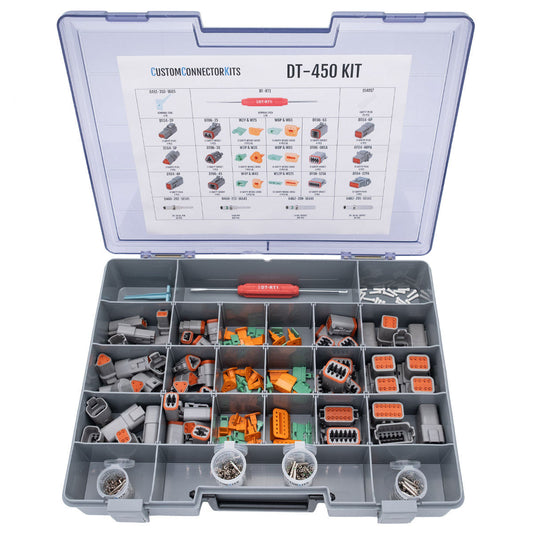
DT vs DTM vs DTP Connector
The primary difference in a DT vs DTM connector comparison is contact size and current capacity. DTM connectors use Size 20 contacts for lower-current circuits, DT connectors use Size 16 contacts for mid-range applications, and DTP connectors use Size 12 contacts for higher-current power circuits. All belong to the DT connector series and share a sealed rectangular design for harsh environments.
Overview of the DT Connector Series
The DT connector series is a family of sealed rectangular connectors commonly used in heavy equipment, agricultural machinery, marine systems, and fleet vehicles. These connectors are designed as a sealed electrical connector platform for harsh environment reliability.
Key characteristics across DT, DTM, and DTP families include:
-
Thermoplastic housings
-
Integrated wire seals
-
Interface sealing between connector halves
-
Secondary contact retention (wedgelock systems)
-
Common crimp-style contact architecture
(Internal link suggestion: sealed electrical connector foundational article)
While the housing styles are similar, the primary difference in a DT vs DTP connector or DT vs DTM connector evaluation comes down to contact size and current rating.
Contact Sizes and Current Ratings
The most important distinction in any Deutsch DT series comparison is contact size.
Each family uses a different contact diameter, which determines:
-
Current carrying capability
-
Compatible wire gauge range
-
Typical application type
Below is a simplified comparison. Always verify exact ratings in manufacturer documentation, as current capacity varies by wire gauge, insulation type, and installation conditions.
|
Series |
Contact Size |
Typical Current Application |
Typical Wire Gauge Range* |
|
DTM |
Size 20 |
7.5 amps, Lower-current circuits (often sensor-level) |
24-20 AWG |
|
DT |
Size 16 |
13 amps, Mid-range general-purpose circuits |
20-14 AWG |
|
DTP |
Size 12 |
22 amps, Higher-current power circuits |
14-10 AWG |
*Wire gauge ranges vary by specific contact part number and manufacturer documentation.
DTM Connector Amp Rating
The DTM connector amp rating is suited for lower-current applications. It is commonly used in sensor circuits and low-power signal lines where compact size is beneficial.
DT Connector Amp Rating
DT connectors use Size 16 contacts, frequently associated with mid-range current circuits. In many applications, this includes lighting, controls, and general-purpose power distribution.
This is where discussions around contact size 16 vs 20 become important. Size 16 contacts provide higher current capacity than Size 20, but require larger wire gauge and housing footprint.
(Internal link suggestion: contact size 16 vs 20 amp rating article)
DTP Connector 25 Amp Rating
DTP connectors use Size 12 contacts. These are typically selected for higher current loads. In many configurations, a size 12 connector amp rating supports substantially more current than Size 16 or Size 20 contacts, depending on conductor gauge.
When evaluating a DTP connector 25 amp requirement, confirm:
-
Wire gauge
-
Insulation type
-
Ambient temperature
-
Duty cycle
Manufacturer documentation should always guide final selection.
Wire Gauge Compatibility and Contact Selection
Contact size selection is directly tied to wire gauge compatibility.
When comparing DT vs DTM vs DTP connector options, consider:
-
Conductor diameter
-
Insulation outer diameter
-
Crimp barrel dimensions
-
Seal sizing
Why Correct Sizing Matters
Oversizing or undersizing can lead to:
-
Incomplete crimp compression
-
Compromised gas-tight integrity
-
Seal leakage
-
Increased resistance
Proper termination requires a correctly matched contact and appropriate gas-tight crimp termination.
(Internal link suggestion: gas-tight crimp termination article)
Environmental ratings only apply when connectors are properly terminated and fully mated.
Typical Application Examples
Understanding real-world use cases simplifies a DTM vs DT vs DTP connector decision.
DTM: Lower-Current and Sensor Circuits
DTM connectors are often used for:
-
Sensor wiring
-
Low-current control circuits
-
Compact harness designs
In applications where a 7.5 amp connector or similar lower-current circuit is sufficient, DTM may be appropriate depending on documented specifications.
DT: General-Purpose Equipment Wiring
DT connectors are frequently used for:
-
Work lights
-
Control modules
-
Solenoids
-
Auxiliary power circuits
They offer a balance between current capacity and compact housing size.
DTP: Higher-Current Power Circuits
DTP connectors are commonly selected when:
-
Higher amperage loads are present
-
Harness simplification is required
-
Connector count reduction is beneficial
Rather than splitting circuits across multiple smaller connectors, a DTP connector may consolidate higher current paths.
However, verify heat rise and ampacity per wire gauge before final selection.
DT vs DTM vs DTP: When Should You Upgrade to DTP?
A common commercial investigation question is whether DTP is necessary.
Consider upgrading to DTP when:
-
Circuit current exceeds typical Size 16 capacity
-
Larger gauge wire is already specified
-
Power distribution simplification is desired
-
Voltage drop needs to be minimized
Using a connector undersized for the load increases long-term failure risk. Using one oversized for the circuit may unnecessarily increase footprint and cost.
Selection should align with documented current ratings and environmental exposure.
Field Service and Tooling Considerations
One advantage of the DT connector series is the shared design philosophy and common contact system.
Benefits include:
-
Consistent crimp-style contacts
-
Familiar termination process
-
Secondary wedgelock retention
-
Simplified service training
Proper termination requires compatible industrial crimp tooling matched to the contact size.
(Internal link suggestion: industrial crimp tooling article)
Field service reliability depends not only on housing selection, but on correct termination technique.
Comparing Footprint and Design Constraints
In addition to amperage, consider:
-
Panel space
-
Harness routing
-
Mating cycle requirements
-
Environmental sealing needs
DTM offers slightly more compact footprint advantages. DT provides general-purpose flexibility. DTP increases current capacity but requires more space.
All three families are designed as sealed rectangular connectors suitable for harsh environments when properly installed.
Frequently Asked Questions
What is the main difference between DT and DTM connectors?
The main difference in a DT vs DTM connector comparison is contact size. DTM uses Size 20 contacts for lower-current circuits, while DT uses Size 16 contacts for higher current applications.
What is the difference between DT and DTP connectors?
In a DT vs DTP connector comparison, DTP uses larger Size 12 contacts designed for higher-current power circuits. DT connectors use Size 16 contacts for mid-range loads.
What is the typical DTP connector amp rating?
The DTP connector 25 amp application is common in higher-current circuits, but exact amp ratings depend on wire gauge, installation conditions, and manufacturer specifications.
Can I use the same tooling across DT, DTM, and DTP?
While the crimping process is similar, tooling must match the specific contact size. Always confirm compatibility with the contact part number before terminating.
Are DT connectors suitable for harsh environments?
Yes, the DT connector series is designed as a sealed connector platform for harsh environments, including heavy equipment, marine, and agricultural applications, when properly installed and mated.
Conclusion
Choosing between a DT vs DTM connector or a DT vs DTP connector comes down to current requirements, wire gauge compatibility, and application demands.
- DTM supports lower-current circuits.
- DT provides mid-range general-purpose capacity.
-
DTP is intended for higher-current power applications.
Accurate contact selection reduces overheating risk, improves long-term reliability, and simplifies maintenance.
If your application requires higher current capacity in a compact sealed format, DTP may be the appropriate solution. View CCK’s DT, DTM, and DTP sealed connector kits available with compatible contacts and tooling.