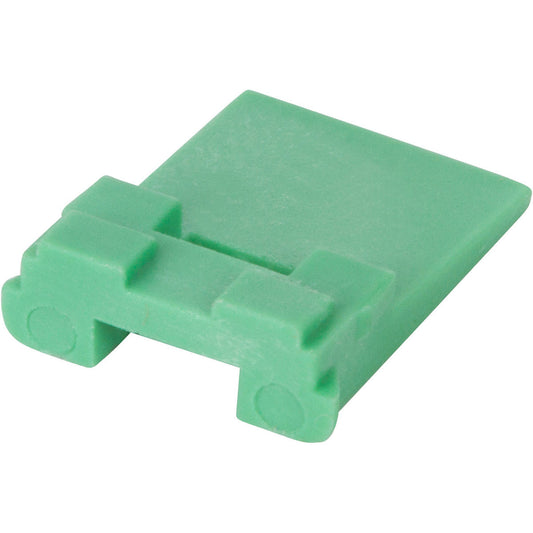
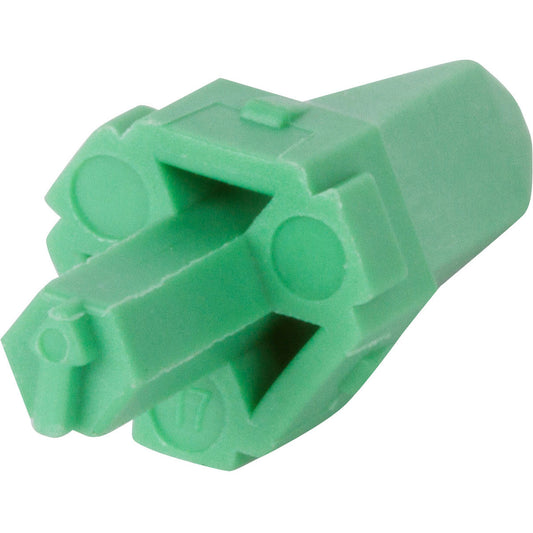
DEUTSCH Wedgelocks
A DEUTSCH wedgelock is a secondary locking component used in sealed connectors to secure contacts in place and maintain proper alignment under vibration. Wedgelocks prevent terminal back-out, reduce intermittent electrical faults, and improve long-term reliability in harsh environments such as heavy equipment, agriculture, and fleet applications.
Why Connector Failure Happens in Harsh Environments
Connector failure in industrial applications is often caused by mechanical instability rather than component defects.
In heavy equipment and mobile systems, connectors are exposed to:
-
Constant vibration
-
Thermal cycling
-
Moisture and contamination
-
Mechanical stress on wiring
Without proper contact retention, these conditions can lead to:
-
Terminal movement inside the connector
-
Loss of contact pressure
-
Intermittent electrical signals
-
Complete circuit failure
This is where connector contact retention systems, such as wedgelocks, play a critical role.
What Is a Wedgelock in a Connector?
A wedgelock is a secondary locking device inserted into the front or rear of a connector housing after the contacts are installed.
Its purpose is to:
-
Secure contacts in their cavities
-
Prevent terminal back-out
-
Maintain alignment between mating contacts
-
Improve vibration resistance
In DETUSCH connector systems, wedgelocks are a standard design feature.
How Wedgelocks Prevent Connector Failure
1. Preventing Terminal Back-Out
One of the most common failure modes in connectors is terminal back-out.
This occurs when:
-
Contacts are not fully seated
-
Vibration causes gradual movement
-
Wire tension pulls terminals backward
A wedgelock physically locks contacts into position, preventing movement once installed.
2. Maintaining Contact Alignment
Proper electrical performance depends on consistent contact alignment.
Wedgelocks:
-
Hold contacts in the correct position
-
Ensure proper mating engagement
-
Prevent misalignment during vibration
This improves electrical continuity and reduces intermittent faults.
3. Improving Vibration Resistance
In vibration-heavy applications such as construction and agricultural equipment, connectors are subjected to constant movement.
Wedgelocks help:
-
Stabilize contacts under vibration
-
Reduce micro-movement at contact interfaces
-
Maintain consistent contact pressure
This directly reduces vibration electrical failures.
Why electrical connections fail in heavy equipment
4. Supporting Long-Term Reliability
By preventing movement and maintaining alignment, wedgelocks:
-
Reduce wear on contact surfaces
-
Minimize resistance changes over time
-
Improve overall connector lifespan
However, performance still depends on:
-
Proper contact insertion
-
Correct crimping technique
-
Fully seated wedgelock installation
Wedgelock vs No Secondary Lock: Key Differences
|
Feature |
Without Wedgelock |
With Wedgelock |
|
Contact Retention |
Relies on primary retention only |
Secondary mechanical lock |
|
Vibration Resistance |
Limited |
Improved stability |
|
Terminal Back-Out Risk |
Higher |
Significantly reduced |
|
Long-Term Reliability |
Variable |
More consistent |
|
Service Reliability |
Increased troubleshooting risk |
Reduced downtime |
This comparison highlights why wedgelocks are critical in harsh environment connector systems.
How Wedgelocks Work with Gas-Tight Crimping
Wedgelocks are only one part of a reliable connection system.
A properly functioning connector requires:
-
Correct contact size selection
-
Proper gas-tight crimp termination
-
Secure wedgelock installation
If the crimp is incorrect, wedgelocks cannot compensate for poor electrical contact.
Together, these elements provide:
-
Mechanical stability
-
Electrical reliability
- Environmental protection
Preventing Mis-Mating and Installation Errors
Wedgelocks also help reduce installation errors.
In many connector systems, wedgelocks:
-
Provide visual confirmation of proper assembly
-
Prevent incomplete contact insertion
-
Ensure contacts are fully seated before locking
This helps prevent mismating connectors and improper assembly during field service.
When Are Wedgelocks Most Important?
Wedgelocks are especially important in applications where:
-
Vibration is constant
-
Equipment is mobile
-
Electrical failures are difficult to diagnose
-
Maintenance access is limited
Common examples include:
-
Heavy equipment
-
Agricultural machinery
-
Fleet vehicles
-
Off-road systems
In these environments, even minor contact movement can result in intermittent faults.
Are Wedgelocks Required for All Connectors?
Not all connectors use wedgelocks, but in sealed connector systems like the DT, DTM, and DTP family, they are standard for a reason.
In harsh environments:
-
Primary retention alone may not be sufficient
-
Secondary locking improves reliability
-
Service intervals can be extended
However, wedgelocks must be:
-
Installed correctly
-
Fully seated
-
Compatible with the connector housing
Improper installation can negate their benefits.
Best Practices for Using Wedgelocks
To ensure proper performance:
-
Verify correct wedgelock for connector series
-
Confirm contacts are fully seated before insertion
-
Install wedgelock completely (flush with housing)
-
Inspect during maintenance
Proper installation supports both mechanical and electrical performance.
Real-World Failure Example
Failure scenario:
-
Connector without secondary locking
-
Vibration causes terminal movement
-
Intermittent signal develops
-
Equipment experiences inconsistent operation
Prevented with:
-
Properly installed DT connector with wedgelock
-
Gas-tight crimp termination
-
Correct contact size
Result:
-
Stable electrical connection
-
Reduced troubleshooting time
-
Improved uptime
Frequently Asked Questions
What is a DT wedgelock?
A DT wedgelock is a secondary locking component used in DEUTSCH DT connectors to secure contacts and prevent movement under vibration.
How do wedgelocks prevent connector failure?
They prevent terminal back-out, maintain alignment, and improve vibration resistance, reducing intermittent electrical faults.
Are wedgelocks necessary in all connectors?
They are not used in all connector types, but in harsh environment applications, they significantly improve reliability.
Can a wedgelock fix a bad crimp?
No. A wedgelock secures the contact mechanically but cannot correct poor electrical termination. Proper crimping is still required.
How do I know if a wedgelock is installed correctly?
It should be fully seated, flush with the connector housing, and installed after confirming proper contact insertion.
Conclusion
Connector failure in harsh environments is often caused by mechanical instability at the contact level.
A properly installed DEUTSCH wedgelock improves connector contact retention, maintains alignment, and reduces vibration-related failures. When combined with proper crimping and correct contact selection, wedgelocks play a critical role in improving long-term electrical reliability.
For applications where vibration, moisture, and mechanical stress are present, using connector systems with integrated wedgelocks can help reduce electrical downtime and improve service performance. Explore CCK’s sealed connector kits, wedgelocks, and termination tooling designed for demanding environments.