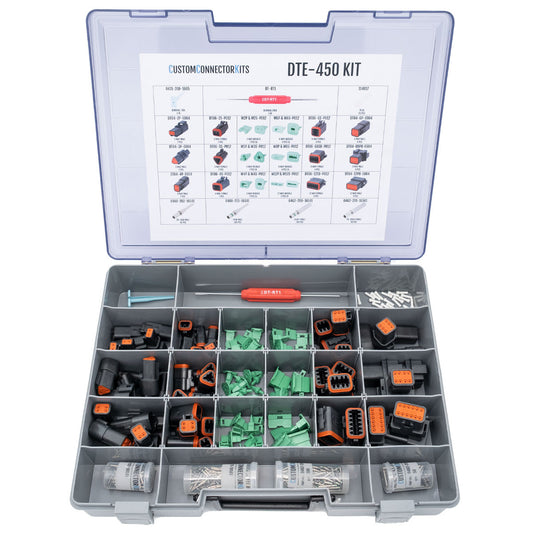
An Ingress Protection (IP) rating is an internationally recognized classification that measures how well an electrical enclosure protects against dust and water intrusion. The first digit indicates protection against solid particles, while the second indicates protection against liquids. Choosing the appropriate IP rating helps improve electrical reliability when connectors are properly installed and matched to their operating environment.
Who This Guide Is For
Whether you're designing a new electrical system, specifying components for an OEM application, or maintaining equipment in the field, understanding ingress protection ratings is essential for selecting the right connector.
This guide is written for:
- Equipment design engineers
- Electrical and harness engineers
- Heavy equipment technicians
- Fleet maintenance professionals
- Agricultural equipment manufacturers
- Marine electrical installers
- Industrial maintenance teams
- OEM purchasing specialists
If your equipment operates in mud, dust, rain, washdown environments, or continuous vibration, understanding connector IP ratings can help improve long-term reliability while reducing maintenance and unexpected electrical downtime.
Why IP Ratings Matter More Than Ever
Electrical systems are becoming increasingly sophisticated across heavy equipment, agriculture, fleet vehicles, marine vessels, and industrial automation.
Modern machines often rely on dozens—or even hundreds—of electrical connections to power sensors, control modules, lighting, telematics, hydraulics, and safety systems.
Unfortunately, these same systems are regularly exposed to harsh environmental conditions, including:
- Dust and airborne debris
- Mud and dirt
- Heavy rain
- High-pressure washdowns
- Snow and ice
- Salt spray
- Continuous vibration
- Wide temperature fluctuations
Every electrical connection exposed to these conditions has the potential to become a failure point if it is not properly protected.
This is where sealed electrical connectors and appropriate ingress protection ratings become critical.
Choosing a connector with the correct environmental protection level can help reduce:
- Moisture intrusion
- Connector corrosion
- Electrical resistance increases
- Intermittent faults
- Unexpected equipment downtime
However, selecting the highest IP rating isn't always the right answer. Understanding what an IP rating actually measures—and what it doesn't—is essential to specifying the correct connector for your application.
Engineering Fundamentals: What Does an IP Rating Measure?
Many people assume an IP rating simply means a connector is "waterproof."
In reality, an Ingress Protection (IP) rating is a standardized engineering classification defined by IEC 60529, an international standard that specifies how enclosures are tested against the intrusion of solids and liquids.
An IP rating provides measurable performance information rather than a marketing description.
For engineers and maintenance professionals, this offers a consistent way to compare connectors intended for harsh environments.
Every IP rating consists of two numbers:
Example: IP68
- First Number: Protection against solid objects (dust, dirt, debris)
- Second Number: Protection against liquids (water exposure)
Understanding these two numbers is the foundation of selecting the correct weatherproof industrial connector for your application.
Understanding the Two Numbers in an IP Rating
The First Digit: Protection Against Solids
The first digit ranges from 0 to 6 and measures how effectively an enclosure prevents the entry of solid particles.
For industrial connectors, the most common value is:
|
First Digit |
Protection Level |
Typical Meaning |
|
0 |
No protection |
Open enclosure |
|
5 |
Dust protected |
Limited dust ingress permitted |
|
6 |
Dust tight |
Complete protection against dust ingress |
For equipment operating in construction, mining, agriculture, or off-road environments, dust protection is just as important as water protection.
Dust contamination can lead to:
- Increased contact resistance
- Connector wear
- Seal damage
- Premature electrical failure
The Second Digit: Protection Against Liquids
The second digit ranges from 0 to 9, and measures how effectively an enclosure prevents the entry of water.
Common industrial connector ratings include:
|
Second Digit |
Protection Level |
|
5 |
Water jets |
|
6 |
Powerful water jets |
|
7 |
Temporary immersion |
|
8 |
Continuous immersion (manufacturer specified) |
This second number often receives the most attention, but it should always be evaluated alongside dust protection.
A connector that performs well while submerged but allows dust intrusion may not be appropriate for heavy equipment operating in dry, dusty conditions.
IP67 vs IP68: What's the Difference?
One of the most common questions engineers ask is:
"Should I choose an IP67 or an IP68 connector?"
The answer depends entirely on how the connector will be used.
Although both ratings provide complete protection against dust intrusion, they differ in how they are tested for water exposure.
IP67 Connector
An IP67 connector is designed to protect against temporary immersion in water under standardized conditions established by IEC 60529.
Typical applications include:
- Heavy rain
- Road spray
- Pressure washing
- Temporary flooding
- Outdoor equipment
For many industrial applications, IP67 provides more than enough environmental protection.
IP68 Connector
An IP68 connector is intended for applications where continuous or prolonged immersion may occur.
However, one important detail is often overlooked:
IP68 is not a single universal performance standard.
Unlike IP67, the immersion depth and duration for IP68 testing are determined by the manufacturer.
For example, one connector may be tested under 1 meter of water for 24 hours, while another is tested under 3 meters of water for 30 minutes. Both may legitimately carry an IP68 rating.
Because of this, engineers should always review the manufacturer's published specifications rather than assuming all IP68 connectors perform identically.
IP67 vs IP68 Connector Comparison
|
Feature |
IP67 Connector |
IP68 Connector |
|
Dust Protection |
Dust tight |
Dust tight |
|
Water Protection |
Temporary immersion |
Continuous immersion (manufacturer specified) |
|
Testing Standard |
IEC 60529 |
IEC 60529 with manufacturer-defined immersion conditions |
|
Typical Applications |
Construction, agriculture, fleet, outdoor equipment |
Marine, submerged equipment, severe environmental exposure |
Both ratings provide excellent environmental connector protection, but selecting between them should be based on operating conditions—not simply choosing the higher number.
IP Rating Selection Guide
Before selecting a connector, consider the environment in which it will operate.
|
If Your Equipment Operates In... |
Consider Looking At... |
|
Indoor industrial equipment |
Lower IP ratings may be appropriate depending on contamination levels |
|
Outdoor construction equipment |
IP67 or higher sealed connectors |
|
Agricultural equipment |
Dust-tight sealed connectors with appropriate water protection |
|
Marine environments |
IP68 connectors with corrosion-resistant materials |
|
Equipment subject to frequent washdowns |
IP67 or IP68 depending on immersion requirements |
|
Applications with continuous immersion |
Manufacturer-specified IP68 connector solutions |
The objective is not to specify the highest available IP rating—it is to specify the most appropriate protection level for the application.
Engineering Note: IP Ratings Are Only One Part of Connector Performance
A high IP rating alone does not guarantee long-term electrical reliability.
Connector performance also depends on:
- Proper contact selection
- Correct wire gauge
- Quality gas-tight crimp termination
- Secure contact retention
- Proper sealing components
- Complete connector mating
- Correct installation practices
An IP-rated connector only achieves its published ingress protection performance when it is assembled, terminated, and mated according to the manufacturer's specifications.
This distinction is especially important in harsh environments where installation quality can have as much impact on reliability as the connector's published specifications.
Does "Waterproof" Mean the Same as IP68?
One of the most common misconceptions in industrial electrical systems is that "waterproof" automatically means IP68. While the terms may often used interchangeably in marketing materials, they do not mean the same thing from an engineering perspective.
The word waterproof has no universally accepted performance standard when used to describe electrical connectors. It simply suggests that a product resists water in some capacity, but it does not define:
- How much water exposure the connector can withstand
- Whether it is protected against dust
- Whether it has been tested for immersion
- The duration or depth of any immersion testing
- The conditions under which it was evaluated
By contrast, an Ingress Protection (IP) rating is based on standardized testing procedures defined by IEC 60529, providing engineers with measurable performance criteria rather than a general marketing description.
For this reason, engineers should evaluate connectors using their published connector IP rating and manufacturer specifications rather than relying solely on terms like "waterproof" or "weatherproof."
Engineering Specifications vs. Marketing Claims
Selecting connectors based on engineering specifications rather than marketing language is one of the best ways to improve long-term electrical reliability.
Marketing descriptions such as:
- Waterproof
- Water-resistant
- Weatherproof
- Rugged
- Heavy-duty
can be useful for general product descriptions, but they do not replace published performance specifications.
When comparing connector systems, engineers should instead evaluate:
- Ingress Protection (IP) rating
- Operating temperature range
- Contact current ratings
- Wire gauge compatibility
- Environmental sealing design
- Connector materials
- Mating cycle ratings
- Vibration resistance
- Manufacturer testing data
This specification-based approach helps ensure that connectors are selected based on application requirements rather than assumptions.
Engineering Insight: The most reliable connector is not necessarily the one with the highest published rating—it is the one whose specifications closely match the demands of the operating environment.
How Proper Installation Affects IP Ratings
Even the highest-rated sealed electrical connector cannot achieve its published environmental protection if it is installed incorrectly.
This is one of the most important concepts engineers and technicians should understand.
An IP rating is based on testing performed using a properly assembled connector system. If any component of that system is improperly installed, the connector may no longer provide its intended level of protection.
Proper installation involves much more than simply plugging two connector halves together.
Wire Entry Seals
Wire entry seals create the first line of defense against moisture and contaminants by sealing around each conductor.
To function correctly:
- The wire diameter must match the seal design.
- Seals should be inspected for cuts or damage.
- Conductors should be inserted without twisting or pinching the seal.
An incorrectly sized wire or damaged seal can create a path for moisture intrusion, even if the connector housing itself remains intact.
Interface Seals
Most industrial sealed electrical connectors include an interface seal positioned between the mating halves.
When the connector is fully engaged, this seal compresses to help prevent:
- Water intrusion
- Dust contamination
- Mud infiltration
- Chemical splash
If the connector is only partially mated or the interface seal becomes damaged, environmental protection may be compromised.
Proper Contact Retention
Each contact must be fully inserted and securely retained inside the connector housing.
Incomplete insertion can lead to:
- Poor electrical contact
- Seal damage
- Reduced vibration resistance
- Intermittent electrical faults
Features such as wedgelocks and secondary locking mechanisms help ensure contacts remain fully seated during operation.
How Wedgelocks Prevent Connector Failure
Gas-Tight Crimp Termination
Environmental sealing begins at the contact itself.
A properly executed gas-tight crimp termination minimizes oxygen intrusion between the conductor strands and the contact barrel, helping reduce oxidation and maintain stable electrical resistance over time.
An improperly crimped contact may allow moisture and oxygen to enter the conductor interface, increasing the likelihood of corrosion and electrical failure.
How to Achieve a Proper Gas-Tight Crimp
Fully Mated Connectors
Even high-quality connectors cannot achieve their intended IP rating unless they are completely engaged.
A connector that is only partially mated may appear connected while leaving gaps that allow contaminants to enter.
Always verify that:
- Locking mechanisms are fully engaged
- Connector halves are completely seated
- Secondary locks are correctly positioned (where applicable)
Engineering Note: A connector's published ingress protection rating only applies when the complete connector system—including contacts, seals, accessories, and mating components—is assembled according to the manufacturer's instructions.
Common Installation Mistakes That Reduce IP Performance
Many connector failures are caused not by the connector itself, but by installation errors.
Some of the most common mistakes include:
Using the Wrong Wire Size
Wire insulation that is too small or too large may prevent the wire seal from sealing properly.
Damaging Seals During Assembly
Small cuts, tears, or contamination on silicone seals can create leak paths that allow water or dust to enter the connector.
Incomplete Contact Insertion
A contact that is not fully seated may prevent the connector from mating correctly and can reduce both electrical and environmental performance.
Improper Crimping
Using the wrong crimp tool or incorrect crimp technique can reduce contact reliability and compromise sealing performance.
Forcing Mismatched Connector Components
Mixing incompatible contacts, seals, or housings may prevent the connector from achieving its intended performance.
Assuming Maintenance Is Unnecessary
Even sealed connectors should be inspected periodically in demanding environments to identify:
- Damaged seals
- Broken locking features
- Connector contamination
- Mechanical wear
Routine inspection helps prevent small issues from becoming costly failures.
Real-World Applications: Choosing the Right Protection Level
Understanding IP ratings becomes much easier when viewed in the context of real operating environments.
Heavy Equipment
Construction and mining equipment routinely encounter:
- Mud
- Dust
- High-pressure washdowns
- Hydraulic fluid
- Continuous vibration
In these applications, connectors should be selected not only for their ingress protection rating but also for vibration resistance, secure locking mechanisms, and serviceability.
Why Electrical Connections Fail in Heavy Equipment (And How to Prevent It)
Agriculture
Agricultural equipment is exposed to a combination of contaminants that can be especially challenging for electrical systems.
Typical conditions include:
- Fertilizer
- Irrigation
- Dust
- Crop residue
- Pressure washing
Sealed connectors with appropriate environmental protection help reduce corrosion and improve long-term reliability during seasonal operation.
Marine Applications
Marine electrical systems present unique challenges due to:
- Salt spray
- Humidity
- UV exposure
- Frequent washdowns
While an IP68 connector may be appropriate for certain marine applications, corrosion resistance, connector materials, and proper installation remain equally important.
Fleet Vehicles
Fleet equipment often experiences:
- Road spray
- Snow
- Ice
- Salt
- Frequent maintenance
Selecting connectors that balance environmental protection with serviceability can help reduce maintenance time and improve fleet uptime.
Industrial Automation
Industrial manufacturing environments may expose connectors to:
- Fine dust
- Coolants
- Oils
- Cleaning chemicals
- Washdown procedures
Connector selection should consider both ingress protection and chemical compatibility.
Engineering Design Considerations Before Selecting an IP-Rated Connector
Before specifying a connector, engineers should evaluate more than just its IP rating.
Consider the following:
- Will the connector be exposed to continuous vibration?
- Is pressure washing part of routine maintenance?
- Will the connector experience temporary or continuous immersion?
- What operating temperature range is expected?
- Will technicians need to disconnect the connector regularly?
- Is chemical exposure likely?
- How many mating cycles are expected over the connector's service life?
Answering these questions helps ensure that the selected connector provides the right balance of environmental protection, durability, and serviceability.
Are Higher IP Ratings Always Better?
Not necessarily.
While it may seem logical to choose the highest available ingress protection rating, doing so is not always the most effective engineering decision.
Higher-rated connectors may involve:
- Increased cost
- Larger connector housings
- Additional sealing components
- Different maintenance requirements
For many applications, an appropriately specified IP67 connector may provide all the environmental protection required.
The goal is to select a connector that matches the application's operating conditions—not simply the highest published specification.
Engineering Best Practice: Choose connectors based on the actual environmental risks your equipment will encounter. Overspecifying can increase cost and complexity without providing meaningful performance benefits, while underspecifying can lead to premature electrical failures and increased maintenance.
Common Misconceptions About IP Ratings
Although IP ratings are widely referenced in product specifications, they are often misunderstood. Clarifying these misconceptions can help engineers, technicians, and purchasing teams make more informed connector selection decisions.
Misconception #1: "IP68 Means Completely Waterproof"
Not exactly.
An IP68 connector is designed to protect against continuous immersion, but the depth and duration of that immersion are defined by the manufacturer—not by the IP standard itself.
One IP68 connector may be tested under different conditions than another. Always review the manufacturer's published specifications before assuming two IP68-rated connectors offer identical performance.
Misconception #2: "All IP68 Connectors Are the Same"
False.
The IP rating only describes ingress protection against dust and water. It does not indicate:
- Current carrying capacity
- Contact design
- Connector material
- Vibration resistance
- Operating temperature
- Chemical resistance
- Service life
When comparing connectors, engineers should evaluate the complete specification—not just the IP rating.
Misconception #3: "A Higher IP Rating Is Always Better"
Not necessarily.
Selecting an IP68 connector for every application can increase cost and complexity without providing additional value.
The most effective connector is the one that matches the actual operating environment.
For many applications, an IP67-rated connector may provide excellent environmental protection while supporting easier serviceability and lower overall cost.
Misconception #4: "A Sealed Connector Cannot Fail"
Even the highest-quality sealed electrical connector depends on proper installation.
Failures often result from:
- Incorrect crimping
- Damaged seals
- Improper wire sizing
- Incomplete mating
- Improper contact insertion
Environmental protection is achieved by the entire connector system—not the housing alone.
Misconception #5: "The Connector Alone Determines the IP Rating"
An ingress protection rating applies to the complete, assembled connector system.
Performance depends on:
- Connector housing
- Contacts
- Wire seals
- Interface seals
- Accessories
- Proper installation
If any component is installed incorrectly, the connector may no longer achieve its published environmental protection.
Frequently Asked Questions
What does an IP68 connector actually mean?
An IP68 connector is dust-tight and designed for continuous immersion under conditions specified by the manufacturer. Because immersion testing varies, engineers should always review the manufacturer's published specifications.
What is the difference between IP67 and IP68?
Both ratings provide complete dust protection.
The primary difference is water exposure.
- IP67 is intended for temporary immersion under standardized test conditions.
- IP68 is intended for continuous immersion under manufacturer-defined conditions.
The appropriate choice depends on the operating environment rather than simply selecting the higher rating.
Is an IP68 connector completely waterproof?
The term "completely waterproof" is not an engineering specification.
IP68 indicates a tested level of ingress protection against water, but performance depends on proper installation and the manufacturer's immersion specifications.
Can improper installation reduce an IP rating?
Yes.
Improper crimping, damaged seals, incorrect wire diameters, incomplete connector mating, or incorrectly installed contacts can all reduce the environmental protection of a connector.
Following the manufacturer's installation procedures is essential to achieving the published IP rating.
Does connector orientation affect ingress protection?
Connector orientation alone does not determine an IP rating, but it can influence how water drains, how contaminants accumulate, and how easily connectors can be inspected during maintenance.
Good harness routing and proper installation practices help improve long-term reliability.
How do IP ratings relate to connector reliability?
An appropriate connector IP rating helps reduce moisture and dust intrusion, but reliability also depends on:
- Proper connector selection
- Correct contact sizing
- Gas-tight crimp termination
- Secure locking mechanisms
- Appropriate operating temperature
- Routine inspection and maintenance
Environmental protection is only one component of a reliable electrical system.
Key Takeaways
- An Ingress Protection (IP) rating measures resistance to dust and water intrusion using internationally recognized testing standards.
- The first digit represents protection against solid particles, while the second represents protection against liquids.
- IP67 and IP68 connectors both provide dust-tight protection, but they differ in immersion testing requirements.
- The term "waterproof" is a marketing description, while IP ratings provide standardized engineering classifications.
- A connector only achieves its published IP rating when it is correctly assembled, terminated, and fully mated according to the manufacturer's specifications.
- Selecting the correct connector requires evaluating the operating environment—not simply choosing the highest available IP rating.
- Proper installation, sealing, and maintenance are just as important as the published specification for achieving long-term electrical reliability.
Why This Matters for Long-Term Reliability
Electrical connectors are often one of the smallest components in a machine, but they play a critical role in overall system performance.
Selecting an appropriate ingress protection rating helps reduce:
- Moisture intrusion
- Connector corrosion
- Electrical resistance
- Intermittent faults
- Unplanned equipment downtime
When combined with proper connector selection, approved tooling, and correct installation practices, the right connector can help improve long-term reliability across heavy equipment, agricultural machinery, fleet vehicles, marine systems, and industrial automation.
As electrical systems continue to become more sophisticated, understanding engineering specifications such as IP ratings allows designers and maintenance professionals to make more informed decisions and build more dependable electrical systems.
Continue Building Your Connector Knowledge
If you're evaluating connectors for harsh environments, these technical resources provide additional guidance:
Learn the Fundamentals
- What Is a Sealed Electrical Connector? (And Why It Matters in Harsh Environments)
- Why Electrical Connections Fail in Heavy Equipment (And How to Prevent It)
Compare Connector Families
- DT vs DTM vs DTP Connectors: How to Choose the Right One
- HD30 vs HDP20: When to Choose Metal vs Thermoplastic Housings
- Circular vs Rectangular Connectors: Design Tradeoffs
Improve Installation Quality
- How to Achieve a Proper Gas-Tight Crimp
- Understanding Contact Sizes: 16 vs 20 vs 12 (Amp Ratings Explained)
- How Wedgelocks Prevent Connector Failure
- Common Tooling Across Connector Families: How to Simplify Inventory
Explore Related Products
- Sealed DT Connector Kits
- HD30 Circular Connectors
- HDP20 Connector Systems
- Crimp Tooling
- Contacts and Terminals
Selecting the correct ingress protection rating starts with understanding your operating environment—not simply choosing the connector with the highest published specification.
Whether you're designing a new electrical system, upgrading an existing harness, or troubleshooting connector failures in the field, choosing the right combination of environmental sealing, contact system, and installation practices can significantly improve long-term reliability.
Custom Connector Kits provides sealed connector systems, industrial connector kits, contacts, terminals, and approved crimp tooling engineered for demanding applications in heavy equipment, agriculture, fleet, marine, and industrial environments.
If you're unsure which connector or IP rating best fits your application, explore Custom Connector Kits’ technical resources and product categories to identify solutions that balance environmental protection, serviceability, and long-term performance.