Introduction to Connector Genders:
Why Connectors Are Classified as Male and Female
In automotive wiring, electrical connections must be precise, secure, and protected from the elements. To achieve this, connectors are designed in complementary pairs—commonly referred to as male and female connectors.
This “gendered” terminology helps identify which component provides the pins (male) and which receives them via sockets (female). While the names are traditional, their purpose is entirely practical: to ensure correct mating and polarity in every connection.
The Importance of Proper Mating in Electrical Systems
Correct alignment between male and female connectors prevents short circuits, signal loss, and component failure. A mismatch or poor contact can cause voltage drop, heat buildup, or intermittent sensor readings, especially in sensitive automotive systems like ECMs, lighting, and sensors.
💡 Tip: Always confirm the connector family and keying pattern (Deutsch DT, Delphi Metri-Pack, AMP Superseal, etc.) before installation. Not all connectors with matching shapes are interchangeable.
What Is a Male Connector?
Defining Features of Male Connectors
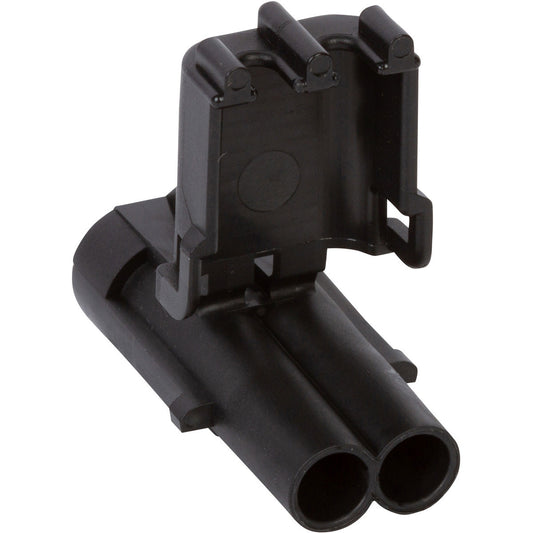
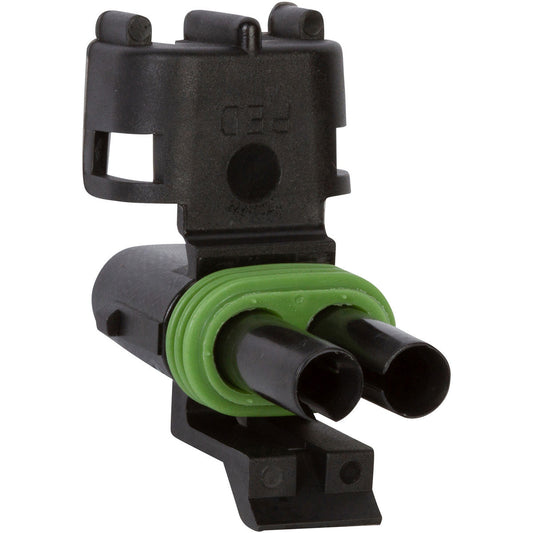
A male connector houses exposed metal pins or blades that insert into the corresponding female sockets. The male side is sometimes referred to as the receptacle, cap or shroud in modern automotive terminology.
Common traits include:
-
Metal pin terminals for conducting current
-
Guiding ribs or keying tabs for alignment
-
Locking tabs or latches to secure the connection
-
Sometimes a secondary seal or grommet at the wire entry
Typical Pin Configurations
Male connectors can feature anywhere from 1 to 48+ pins, depending on the circuit density. In automotive systems:
-
Single-pin plugs often handle power leads or grounds.
-
2–12-pin connectors are standard for sensors, lighting, and chassis components.
-
High-density multi-pin connectors (up to 48 pins) appear in engine control modules (ECMs) and infotainment systems.
🔗 Shop Deutsch DT and DTP Connectors for 2-pin to 12-pin configurations built for harsh environments.
Common Applications in Automotive Wiring
Male connectors are used where incoming power or signals are received—examples include:
-
Alternator and ignition harnesses
-
Headlight and tail light pigtails
-
ECU and sensor output terminals
-
Power distribution blocks
Their design prioritizes easy insertion and high conductivity while maintaining environmental protection.
What Is a Female Connector?
Defining Features of Female Connectors
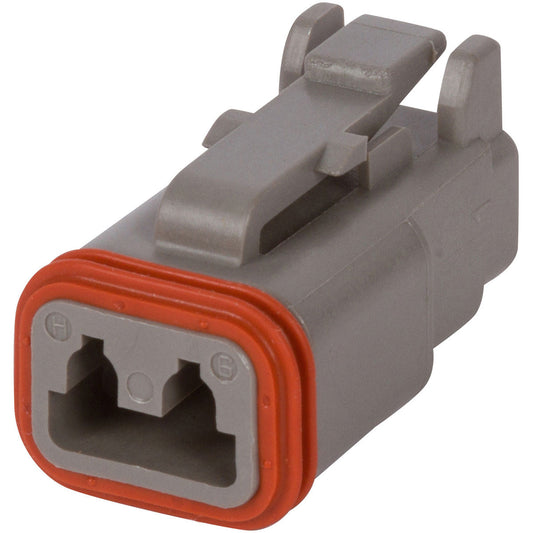
A female connector contains recessed sockets or cavities designed to receive the male pins. The female side is sometimes referred to as the plug or tower housing.
Key features include:
-
Internal socket terminals for electrical contact
- Protective housing walls to shield from debris and damage
-
TPA (Terminal Position Assurance) locks that ensure full terminal seating
-
Integrated silicone seals for moisture resistance
Socket Design and Retention
Socket terminals are engineered to maintain consistent pressure on the mating pins. This tight contact prevents voltage fluctuation even under vibration. In sealed systems (like Deutsch DT), multiple silicone barriers protect both wire entry and mating faces from water and contaminants.
⚙️ For OEM-grade sealing, use Sealed Connector Kits rated to IP67/IP68 standards.
Where Female Connectors Are Typically Used
Given the recessed placement of their sockets, female connectors are often found at the stationary or hot side of a circuit—sometimes mounted to a bulkhead, such as:
-
Engine sensors and control units
-
Lighting modules and interior harness junctions
-
Chassis-mounted devices (ABS, transmission, etc.)
Male vs Female Connectors: How They Work Together
Pin-to-Socket Alignment
Male pins and female sockets fit together precisely, forming a gas-tight electrical contact that ensures current continuity. The connector housing guides each pin into its matching cavity, preventing bending or misalignment.
Role of Locking Mechanisms and Seals
Most automotive connectors include secondary locks or TPA clips that prevent terminals from backing out under vibration. High-quality designs, like TE Connectivity AMP Superseal or Deutsch DT, also feature redundant sealing—a combination of perimeter and wire-entry grommets to block water and dust.
Ensuring Reliable Electrical Contact
Reliable connection depends on:
-
Proper crimping of the terminals
- Correct mating of pin and socket
-
Full engagement of locking tabs or levers
Even a slight gap between terminals can create heat buildup and voltage drop, leading to premature component wear.
Pin Counts and Connector Variations
Single-Pin vs Multi-Pin Connectors
-
Single-pin connectors: Used for battery power, grounds, or sensor leads.
-
Multi-pin connectors: Consolidate multiple circuits for efficient harness routing.
How Pin Count Affects Circuit Density
Higher pin counts reduce overall harness bulk but increase precision requirements during crimping and assembly. Manufacturers use keyed housings and color-coding to avoid mismating during production.
Examples of Common Pin Arrangements
-
Deutsch DT Series: 2–12 cavities (13A continuous current)
-
Deutsch DTP Series: 2–4 cavities (25A)
-
Delphi GT Series: 2–48 cavities
-
AMP Superseal Series: 1–6 cavities for compact automotive sensors
🔗 Learn more in our Automotive Wire Gauge Guide for proper current capacity matching.
Caps and Plugs: Modern Terminology in Automotive Connectors
Why Manufacturers Use “Caps” and “Plugs” Instead of Male/Female
To create more inclusive, standardized terminology, many OEMs now label connectors as caps or receptacles (male) and plugs (female) instead of gendered terms. This approach simplifies documentation, reduces confusion, and aligns with global manufacturing standards.
How the Terms Relate to Traditional Connector Pairings
-
Cap or Receptacle = Male connector (with pins)
-
Plug = Female connector (with sockets)
You’ll often see this terminology in DEUTSCH and TE Connectivity datasheets.
Examples from Common Connector Families
|
Connector Family |
Male Component |
Female Component |
Sealing |
|
Deutsch DT |
Receptacle with pins |
Plug with sockets |
IP68 |
|
Delphi Weather-Pack |
Male with male terminals |
Female with female terminals |
IP67 |
|
AMP Superseal |
Cap housing |
Plug housing |
IP67–IP69K |
Advantages of Using Neutral Terminology in Documentation
Using “cap” and “plug” eliminates ambiguity when referencing connectors in technical drawings or repair manuals. It also clarifies that both components are part of one matched connector system, not interchangeable parts.
Choosing the Right Connector for Your Application
Matching Caps and Plugs Correctly
Always pair connectors from the same family and cavity count—mixing manufacturers or pin layouts can result in poor contact or misalignment.
✅ Shop Deutsch and AMP connector kits for pre-matched caps, plugs, and terminals.
Considering Sealed vs Unsealed Designs
-
Sealed connectors: Ideal for engine bay, chassis, or marine use (DT, DTP, AMP Superseal).
-
Unsealed connectors: Suitable for cabin electronics and dry zones.
Wire Gauge and Current Capacity Considerations
Choose the connector system based on wire size and load:
-
DTM (size 20): 16–22 AWG, 7.5A
-
DT (size 16): 14–20 AWG, 13A
-
DTP (size 12): 10–14 AWG, 25A
🔗 Reference: TE Connectivity Automotive Connectors
Frequently Asked Questions (People Also Asked)
How can you tell a male connector from a female connector?
A male connector has visible pins or blades, while a female connector has recessed sockets. In modern documentation, these can be referred to as caps (male) and plugs (female).
Can male and female connectors from different families be used together?
No. Even if they appear similar, keying, pin spacing, and locking mechanisms differ between connector families. Always match the exact series and cavity count.
Do manufacturers always label connectors as caps and plugs?
Each manufacturer uses their own terminology to best identify the connectors in their product systems. Common uses are “cap/plug,” “male/female,” “shroud/tower,” or “receptacle/plug.” Review each manufacturer’s technical specs to ensure familiarity with the product’s designation.
Matching Connectors for Reliable Performance
Trusted Connector Solutions from Custom Connector Kits (CCK)
At Custom Connector Kits, we make it easy to find compatible caps, plugs, terminals, and seals from trusted OEM brands.
Choose from:
-
Deutsch DT, DTP & DTM Connectors – built for off-road and industrial durability
-
AMP Superseal and Delphi Metri-Pack Systems – ideal for OEM-style repairs
-
Professional Crimping Tools & Extraction Kits – for consistent, factory-grade crimps
Reliable mating begins with the right match—male or female, cap or plug—precision is the key.
|
Feature |
Male Connector (Cap) |
Female Connector (Plug) |
|
Electrical Contact |
Pins protrude |
Sockets receive pins |
|
Function |
Output / Sending current |
Input / Receiving current |
|
Common Label |
“Cap” or “Plug with Pins” |
“Plug” or “Receptacle with Sockets” |
|
Location |
Power side of circuit |
Sensor or module side |
|
Example |
Deutsch DT06-2S |
Deutsch DT04-2P |