Choosing the right DEUTSCH crimp tool starts with the contact—not just the connector housing.
A DT, DTM, or DTP connector may help identify the general contact size used in the system, but the connector family alone does not tell you which crimp tool you need. Before selecting tooling, confirm the exact contact, whether it is solid or stamped-and-formed, the contact size, and the supported wire range.
That distinction matters because solid and stamped-and-formed DEUTSCH contacts use different crimping approaches and should not be assumed to use interchangeable tooling.
For technicians, equipment owners, harness builders, and maintenance teams, getting this right before ordering can prevent incompatible tooling, poor terminations, rework, and unnecessary downtime.
What DEUTSCH Crimp Tool Do I Need?
The correct crimp tool for DEUTSCH connectors depends on the exact contact and wire combination being terminated.
Before choosing a tool, verify:
• The DEUTSCH connector family
• The exact contact part number
• Whether the contact is solid or stamped-and-formed
• Contact size
• Wire gauge or supported wire range
• Manufacturer-specified tooling
• Any required dies, locators, or tool settings
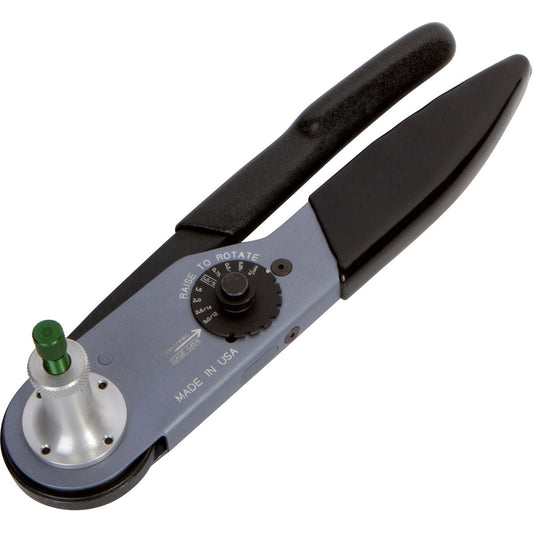
For example, the HDT-48-00 is a ratcheting hand crimp tool intended for specified DEUTSCH solid contacts. It is not intended for stamped-and-formed contacts.
The simplest rule is:
Identify the contact first. Choose the crimp tool second.
Why the Connector Family Alone Does Not Determine the Crimp Tool
It is common to start a tooling search with a question such as:
• What crimper do I need for a DT connector?
• Which crimp tool works with DTM contacts?
• Can I use the same tool on DT and DTP connectors?
Those questions are useful starting points, but they do not provide enough information by themselves.
DEUTSCH connector families use different contact sizes, and individual connector systems may also support different contact constructions.
For example:
• DTM connectors commonly use Size 20 contacts
• DT connectors commonly use Size 16 contacts
• DTP connectors commonly use Size 12 contacts
• HDP20 and HD30 connectors commonly use multiple size contacts
But contact size is only one part of the tooling decision.
You still need to determine whether the terminal is a solid contact or a stamped-and-formed contact and verify the specific contact and wire specifications before choosing the crimper.
If you are still determining which connector family fits your application, see CCK's DT vs. DTM vs. DTP connector comparison before selecting contacts and tooling.
Solid vs. Stamped-and-Formed DEUTSCH Contacts
One of the most important distinctions when choosing a DEUTSCH connector crimper is whether you are working with a solid contact or a stamped-and-formed contact.
Although both styles perform the same basic electrical function—creating a connection between the conductor and connector—their construction and crimping requirements differ.
What Is a Solid DEUTSCH Contact?
A solid DEUTSCH contact uses a closed-barrel contact design that is crimped around the conductor using tooling designed for that contact style.
Solid contacts are commonly encountered in DEUTSCH connector systems used in:
• Heavy equipment
• Agricultural machinery
• Fleet vehicles
• Off-road equipment
• Marine applications
• Field-service repairs
• Low-volume harness assembly
The HDT-48-00 is one example of a hand tool designed for compatible DEUTSCH solid contacts.
Its four-indent crimping action applies compression around the contact barrel to produce a controlled termination when the correct contact, wire, and tool settings are used.
What Is a Stamped-and-Formed DEUTSCH Contact?
Stamped-and-formed contacts are manufactured differently from solid contacts and use a different termination geometry.
Rather than using the same four-indent termination associated with compatible solid contacts, stamped-and-formed contacts require tooling designed to form the conductor and applicable insulation-support wings correctly around the wire.
The important takeaway is not that one contact style is universally better than the other.
It is that the tooling requirements are different.
Can You Use the Same Crimp Tool for Solid and Stamped Contacts?
Do not assume so.
DEUTSCH specifies different tooling approaches for solid and stamped-and-formed contacts.
A tool designed for a DEUTSCH solid contact should not automatically be treated as compatible with a stamped-and-formed contact simply because both contacts may be used within related DEUTSCH connector systems.
Before crimping, verify the exact terminal part number and the tooling specified for that terminal.
Solid vs. Stamped-and-Formed Contacts
|
Selection Factor |
Solid Contact |
Stamped-and-Formed Contact |
|
Contact construction |
Solid / closed barrel |
Open barrel |
|
Typical crimp approach |
Indent-style termination |
Formed conductor and insulation-support crimp |
|
Tool selection |
Tool specified for compatible solid contact |
Tool or die specified for stamped contact |
|
Can tooling be assumed interchangeable? |
No |
No |
|
What determines compatibility? |
Exact contact, contact size, wire range, tooling specification |
Exact contact, wire range, and tooling specification |
|
Best buyer action |
Verify the contact before selecting the tool |
Verify the contact before selecting the tool |
How to Choose the Right DEUTSCH Crimp Tool
Instead of starting with a crimper and trying to determine which contacts it can handle, work through the selection process in the opposite direction.
Step 1: Identify the Exact Contact
Start by identifying the terminal you are installing or replacing.
Determine:
• Contact part number
• Pin or socket
• Solid or stamped-and-formed construction
If you are repairing an existing harness, do not rely solely on the appearance of the connector housing.
The housing may tell you the connector family, but the contact installed inside the housing provides the information needed to verify the appropriate tooling.
If the contact part number is unknown, identify the terminal before purchasing a crimp tool.
CCK Tech Tip
When servicing an existing harness, identify the contact already installed before ordering replacement terminals or tooling. The connector housing alone may not provide enough information to confirm the correct crimp tool.
Step 2: Confirm the Contact Size
After identifying the contact type, verify its size.
Within the DEUTSCH DT family:
|
Connector Family |
Common Contact Size |
Typical Application |
|
DTM |
Size 20 |
Lower-current and signal circuits |
|
DT |
Size 16 |
General-purpose equipment circuits |
|
DTP |
Size 12 |
Higher-current power circuits |
These family relationships are useful for narrowing the selection, but they should not replace verification of the actual contact part number.
Contact size affects:
• Terminal dimensions
• Supported conductor range
• Crimp geometry
• Tool setup
• Electrical capacity
If you are comparing the connector families themselves, CCK's DT vs. DTM vs. DTP Connectors: Differences in Contact Size, Amp Rating, and Application provides a more detailed comparison.
Step 3: Confirm the Wire Range
The wire must also be compatible with the selected contact.
Before choosing your DEUTSCH terminal crimp tool, verify the contact's supported conductor range.
Consider:
• Wire gauge
• Conductor size
• Contact specification
• Insulation requirements where applicable
A common mistake is selecting a crimp tool based on wire gauge alone.
For example, knowing that a circuit uses 16 AWG wire is not enough to identify the proper crimper.
The tooling decision still depends on the contact being terminated.
Think of the relationship as:
Wire → Contact → Tool
rather than:
Wire → Tool
Correctly matching all three helps create a repeatable termination and reduces the risk of poor electrical performance.
Step 4: Match the Tool to the Contact Specification
Once you know the contact construction, size, part number, and wire range, you can verify the correct tooling.
Check:
• Tool part number
• Supported contact sizes
• Supported wire range
• Locator requirements
• Die requirements
• Tool settings where applicable
• Manufacturer instructions
• Compatibility exclusions
This last point is especially important.
Knowing what a tool does not crimp can be just as valuable as knowing what it does.
Where Does the HDT-48-00 Fit?
The HDT-48-00 DEUTSCH crimp tool is one of the most common hand tools associated with DEUTSCH solid-contact connector systems.
CCK's HDT-48-00 is a genuine TE ratcheting crimp tool for compatible 22–12 AWG DEUTSCH solid contacts.
It is used with compatible solid contacts across applications including DT, DTM, DTP, and certain other DEUTSCH systems.
The tool creates a symmetrical four-way indent around the contact barrel.
However, one limitation is particularly important:
The HDT-48-00 is not intended for stamped-and-formed contacts.
That distinction makes identifying the terminal before choosing the tool essential.
When the HDT-48-00 May Be Appropriate
The HDT-48-00 may be appropriate when:
• You are working with a compatible DEUTSCH solid contact
• The contact size falls within the tool's supported range
• The conductor falls within the supported wire range
• The contact manufacturer specifies compatible four-indent tooling
• The tool is appropriate for the intended service or assembly environment
When You May Need Different Tooling
Different tooling may be required when:
• The contact is stamped-and-formed
• The terminal falls outside the tool's supported contact range
• The conductor is outside the supported wire range
• The contact requires a different die or crimp geometry
• The manufacturer specifies another termination tool
The correct question is therefore not simply:
“Will the HDT-48-00 crimp a DEUTSCH connector?”
A better question is:
“Is the HDT-48-00 specified for this exact DEUTSCH contact and wire combination?”
That distinction prevents many tooling-selection mistakes.
Common DEUTSCH Crimp Tool Selection Mistakes
Crimp failures do not always begin during crimping.
Sometimes the mistake occurs before the tool is ever used.
Choosing a Crimper Based Only on “DT Connector”
Identifying a housing as a DT connector helps narrow down the contact family, but it does not completely define the tooling requirement.
Confirm the actual terminal before purchasing or setting up the tool.
Assuming All DEUTSCH Contacts Are Solid
DEUTSCH connector systems are available with different contact constructions.
Do not assume that a contact is solid simply because it is used in a familiar DEUTSCH housing.
Identify the contact itself.
Choosing the Tool by Wire Gauge Alone
Wire gauge is important, but it is only one variable.
The correct crimp system depends on:
wire + contact + tooling
not wire size alone.
Assuming Every “DEUTSCH Crimper” Works the Same Way
Tool descriptions can vary significantly.
Before choosing a tool, verify:
• Contact construction
• Exact terminal compatibility
• Contact size
• Wire range
• Crimp geometry
• Required settings or dies
A generic compatibility statement should not replace contact-specific documentation.
Buying Contacts and Tooling Separately Without Checking Compatibility
A replacement contact may physically fit the intended connector family while still requiring tooling different from what is already available in the shop or service vehicle.
When ordering replacement parts, check the complete repair system:
Housing → Contact → Wire → Tool → Installation procedure
This is particularly valuable for field-service teams trying to standardize repair inventories.
Can One DEUTSCH Crimp Tool Work Across DT, DTM, and DTP Connectors?
In some cases, yes—but compatibility comes from the contacts supported by the tool, not simply from the connector family names.
DTM, DT, and DTP commonly use different contact sizes:
• DTM: Size 20
• DT: Size 16
• DTP: Size 12
The HDT-48-00 is designed for specified Size 20, 16, and 12 solid contacts, which allows it to support multiple compatible solid-contact applications across these connector families.
That can be useful for maintenance organizations and technicians who service several types of equipment.
However, this does not mean that every contact used with a DTM, DT, or DTP connector is automatically compatible with the tool.
Always verify the terminal itself.
Why Common Tooling Matters for Field Service
Tool compatibility has implications beyond initial connector assembly.
Heavy equipment and mobile machinery are often repaired:
• At jobsites
• In service trucks
• At remote locations
• Outdoors
• Under time pressure
Every additional specialized tool that must be stocked, located, and carried can complicate the repair process.
Standardizing around documented contact-and-tool combinations can help simplify:
• Technician training
• Service truck inventory
• Replacement-parts stocking
• Field repair procedures
• Troubleshooting
• Preventive maintenance planning
But common tooling should not be confused with universal tooling.
A single tool may cover several specified contacts while still being completely inappropriate for another contact construction.
For more on how tooling and replacement-component planning affects equipment uptime, see How to Reduce Downtime with Field-Serviceable Connector Systems.
Field Repair vs. Production: Does the Tooling Requirement Change?
The electrical termination still needs to meet the applicable contact requirements, but the type of tooling used may vary based on production volume and workflow.
Hand crimp tools are often useful for:
• Field repairs
• Prototype harnesses
• Equipment maintenance
• Small production runs
• Low-volume assembly
• Service departments
Higher-volume production environments may use different tooling or automated processes depending on the contact and manufacturing requirements.
For a technician replacing several contacts in a damaged equipment harness, portability and repeatability may matter most.
For a harness manufacturer producing thousands of identical terminations, production throughput and process control may lead to a different tooling setup.
In either case, the contact specification should drive tooling compatibility.
Choosing the Correct Tool Is Only the First Step
Selecting the right DEUTSCH crimping tool does not automatically guarantee a reliable termination.
Crimp quality also depends on:
• Proper wire stripping
• Correct conductor preparation
• Correct contact positioning
• Proper tool adjustment
• Complete crimp-cycle operation
• Inspection of the finished termination
A properly matched tool makes a reliable crimp possible. Correct technique is what completes the process.
For detailed termination guidance, see CCK's How to Achieve a Proper Gas-Tight Crimp for Industrial Connectors.
DEUTSCH Crimp Tool Selection Checklist
Before ordering or using a crimp tool, confirm:
• Connector family
• Exact contact part number
• Pin or socket contact
• Solid or stamped-and-formed construction
• Contact size
• Wire gauge or supported wire range
• Required die, locator, or tool setting
• Manufacturer-specified tooling
• Intended application: repair, prototype, low-volume, or production
• Any stated tooling exclusions
If one of these details is unknown, identify it before choosing the tool.
That extra verification step can prevent ordering the wrong tooling, damaging contacts, or creating terminations that need to be reworked.
Choosing DEUTSCH Tooling for a Serviceable Electrical System
The crimp tool may represent only one part of a connector installation, but it has a direct effect on how successfully the system can be assembled and serviced.
For fleets, heavy equipment operators, harness builders, and field technicians, connector standardization works best when the entire service system is considered together:
• Connector family
• Replacement contacts
• Wire sizes
• Crimp tooling
• Extraction tools
• Service procedures
• Replacement inventory
A connector system that uses familiar components and documented tooling can make future repairs easier to plan.
But that advantage depends on knowing exactly which components are compatible.
Rather than asking whether a crimp tool works with “DEUTSCH connectors” in general, identify the exact terminal and verify the tooling intended for it.
That small change in the selection process can prevent many of the most common tooling mistakes.
Frequently Asked Questions
What crimp tool do I need for DEUTSCH connectors?
The correct DEUTSCH crimp tool depends on the exact contact being terminated. Identify whether the contact is solid or stamped-and-formed, confirm the contact size and wire range, and then verify the manufacturer-specified tooling. Do not choose a crimper based only on the connector housing.
Can I use the HDT-48-00 on stamped DEUTSCH contacts?
No. The HDT-48-00 is intended for compatible DEUTSCH solid contacts and is not intended for stamped-and-formed contacts. Stamped contacts require appropriate tooling for their contact design and wire range.
Does the HDT-48-00 work with DT, DTM, and DTP connectors?
The HDT-48-00 can be used with specified compatible Size 20, 16, and 12 DEUTSCH solid contacts, which includes applications within DTM, DT, and DTP connector families. Compatibility should still be verified using the exact contact part number.
Are DEUTSCH solid and stamped contacts the same?
No. Solid and stamped-and-formed contacts differ in construction and crimping requirements. Tooling should be selected for the exact contact being terminated.
Does wire gauge determine which DEUTSCH crimp tool I need?
Not by itself. Wire gauge must be compatible with the contact, but tool selection also depends on the contact construction, contact size, part number, and manufacturer tooling requirements.
Can one DEUTSCH crimper handle multiple contact sizes?
Some tools can. For example, the HDT-48-00 supports specified DEUTSCH solid contacts across multiple contact sizes. Always verify compatibility for the exact terminal before crimping.
Do I need a special crimp tool for field repairs?
Field repairs do not necessarily require a different electrical termination standard, but hand crimp tools are often practical for field service because they are portable and suitable for lower-volume work. The tool must still match the contact being installed.
Match the Contact Before You Choose the Tool
The most reliable way to select a DEUTSCH crimp tool is to work from the contact outward.
Start with:
Contact construction → contact size → wire range → specified tooling
not simply:
Connector family → crimp tool
That process is especially important when working across DT, DTM, DTP, and other DEUTSCH connector systems where different contact sizes and contact constructions may be encountered.
If you are using compatible solid DEUTSCH contacts, the HDT-48-00 ratcheting crimp tool can provide a common tooling solution across several applications. If you are working with stamped-and-formed contacts or another terminal configuration, verify the applicable tooling before beginning the repair or assembly.
Shop CCK's DEUTSCH crimp tools, contacts, and connector components to build a compatible termination system—or contact CCK with your connector family, contact part number, and wire gauge if you need help confirming the correct combination.