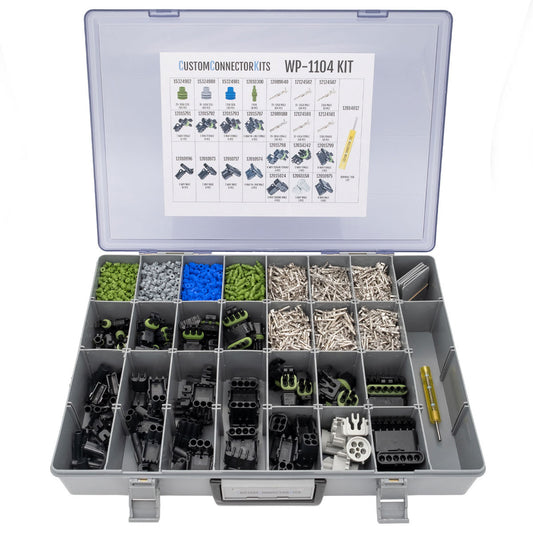
What Is a Sealed Electrical Connector? (Short Answer)
A sealed electrical connector is a connector designed to prevent moisture, dust, and contaminants from entering the contact cavity or wire interface. It uses integrated wire seals, interface gaskets, and properly executed crimp terminations to maintain electrical integrity in harsh environments such as heavy equipment, marine, agricultural, and industrial applications.
Sealed connectors are commonly specified where vibration, thermal cycling, and environmental exposure would quickly compromise an unsealed connection.
Why Sealed Electrical Connectors Matter in Harsh Environments
Electrical failures in industrial systems are often not caused by the device itself, but by the connection. In environments exposed to water, dust, or vibration, open terminals and unsealed housings are vulnerable to corrosion and intermittent faults.
Applications that typically require a connector for harsh environments include:
-
Heavy equipment
-
Agricultural machinery
-
Marine electrical systems
-
Fleet vehicles
-
Industrial hydraulic power units
In these settings, a properly specified environmentally sealed connector can significantly reduce electrical downtime and maintenance frequency.
The Problem with Unsealed Electrical Connections
Unsealed connectors are susceptible to multiple failure mechanisms:
-
Moisture intrusion leading to corrosion
-
Dust and debris contamination
-
Vibration-induced contact movement
-
Thermal expansion and contraction
-
Increased resistance and localized heating
Moisture and Corrosion
When moisture enters a connector cavity, it can reach the conductor-to-contact interface. Oxygen combined with humidity accelerates oxidation, increasing resistance over time. Elevated resistance can generate heat under load, especially in higher-current circuits.
This is a common issue in heavy equipment electrical connectors exposed to rain, washdowns, and seasonal humidity changes.
Vibration and Contact Instability
Construction, mining, agricultural, and fleet equipment operate under constant vibration. Without secure contact retention and sealing, terminals may loosen or micro-move. Even small shifts can create intermittent signals and diagnostic challenges.
Dust and Contamination
Fine particulate matter can enter unsealed housings, interfering with contact engagement and reducing long-term reliability.
A properly designed industrial sealed connector addresses all of these risks through layered sealing and retention systems.
How Environmental Sealing Works
A sealed electrical connector protects both the external interface and the internal termination. Sealing occurs at multiple points.
Silicone Wire Entry Seals
At the rear of the connector, individual silicone seals compress around the wire insulation. This prevents moisture from traveling along the conductor into the contact cavity.
Proper performance depends on matching:
-
Insulation diameter
-
Seal size
-
Wire gauge
Incorrect sizing can compromise sealing performance.
Interface Seals Between Connector Halves
At the mating face, a gasket or molded interface seal prevents water and dust from entering between connector halves.
This design feature is common in waterproof electrical connector systems intended for outdoor and mobile equipment use.
Environmental protection ratings apply only when connectors are fully mated and properly terminated.
Gas-Tight Crimp Termination
Sealing must also occur at the electrical interface.
A properly executed gas-tight crimp termination compresses the conductor strands and contact barrel to exclude oxygen. This minimizes oxidation and stabilizes electrical resistance.
Without a proper crimp, even a sealed housing cannot prevent long-term performance degradation.
Gas-Tight Crimp Termination Guide
Sealed vs Unsealed Connectors: Key Differences
|
Feature |
Unsealed Connector |
Sealed Electrical Connector |
|
Moisture Protection |
Minimal |
Integrated wire and interface seals |
|
Dust Protection |
Limited |
Designed to prevent particulate ingress |
|
Vibration Resistance |
Basic retention |
Secondary locks and wedgelocks |
|
Corrosion Resistance |
Low in exposed environments |
Reduced oxygen and moisture intrusion |
|
Typical Application |
Indoor or controlled environments |
Heavy equipment, marine, agriculture |
This distinction is critical when specifying heavy equipment electrical connectors or outdoor systems.
What Makes an IP68 Electrical Connector Different?
An IP68 electrical connector is rated for protection against continuous immersion under conditions defined by the manufacturer.
IP ratings classify protection levels:
-
IP67: Protected against temporary immersion
-
IP68: Protected against prolonged immersion under specified depth and duration
However, IP ratings:
-
Apply only when connectors are fully mated
-
Depend on proper installation
-
Do not override current or temperature limitations
IP68 Connector Ratings Explained
Spec-based verification is essential before assuming environmental suitability.
Performance Characteristics to Evaluate
When selecting a moisture resistant electrical connector, engineers should verify:
1. Temperature Range
Many sealed connector families used in industrial equipment are rated for extended operating ranges, often approximately -55°C to +125°C depending on materials and series.
Always confirm manufacturer specifications.
2. Contact Retention Systems
Secondary locking features such as wedgelocks help maintain contact alignment under vibration.
Connector families such as the DT series use internal retention systems specifically designed for harsh environments.
DT vs DTM vs DTP Connector Comparison
3. Secure Locking Mechanisms
Latch systems, coupling rings, or jackscrews ensure the connector remains fully engaged.
4. Current and Wire Gauge Compatibility
Contact size must align with:
-
Required amperage
-
Wire gauge
-
Insulation diameter
Oversizing or undersizing can compromise both electrical performance and environmental sealing.
Where Sealed Connectors Are Required
Off-Road and Heavy Equipment
Vibration, mud, and dust demand a true connector for harsh environments. Sealed DT series connectors are commonly specified for these applications.
DT vs DTM vs DTP connector comparison
Agricultural Machinery
Seasonal exposure to moisture, fertilizers, and washdowns requires durable sealing systems.
Marine Applications
Salt spray accelerates corrosion. A properly specified waterproof electrical connector reduces conductive contamination and long-term degradation.
Fleet Maintenance
Fleet operators often upgrade to sealed systems to reduce repeat electrical troubleshooting and service calls.
Industrial Hydraulics
Hydraulic systems exposed to oil mist and debris benefit from robust sealed housings such as HD30 aluminum circular connectors.
HD30 aluminum circular connectors
Are Sealed Electrical Connectors Worth Upgrading To?
In controlled indoor environments, unsealed connectors may perform adequately.
However, in vibration-heavy or moisture-prone applications, upgrading to a sealed electrical connector can:
-
Reduce intermittent electrical faults
-
Minimize corrosion-related resistance increases
-
Improve long-term reliability
-
Lower diagnostic time
-
Reduce downtime costs
Environmental sealing reduces risk but does not eliminate the need for proper installation, strain relief, and correct termination.
Evaluation should always include:
-
Documented IP rating
-
Current capacity
-
Temperature range
-
Mating cycle specification
-
Manufacturer documentation
Choosing the Right Sealed Connector
Selecting the appropriate industrial sealed connector requires evaluating:
-
Required current and contact size
-
Wire gauge and insulation diameter
-
Environmental exposure level
-
Mating frequency
-
Field service requirements
Connector families such as DT rectangular connectors and HD30 aluminum circular connectors offer different mechanical and environmental characteristics.
Review detailed specifications before final selection.
Sealed Connector Kits Product Category
Frequently Asked Questions
Are sealed electrical connectors waterproof?
A sealed electrical connector can be waterproof if it carries an appropriate ingress protection rating, such as IP67 or IP68. The rating depends on the connector design and correct installation.
What is the difference between a sealed connector and an environmentally sealed connector?
The terms are often used interchangeably. An environmentally sealed connector emphasizes protection against moisture, dust, vibration, and contaminants in harsh operating conditions.
Do sealed connectors prevent corrosion completely?
They significantly reduce corrosion risk by limiting moisture and oxygen intrusion, particularly when combined with a proper gas-tight crimp. However, correct installation and environmental compatibility remain essential.
When should heavy equipment electrical connectors be sealed?
When equipment operates outdoors, in vibration-heavy conditions, or in environments exposed to dust, water, or chemicals.
What makes an IP68 electrical connector suitable for immersion?
An IP68 electrical connector is designed to withstand prolonged immersion under manufacturer-defined conditions. Always verify depth and duration specifications before deployment.
Conclusion
A sealed electrical connector is engineered to maintain electrical integrity in harsh environments by combining wire seals, interface gaskets, and proper termination practices.
In heavy equipment, agriculture, marine, fleet, and industrial applications, upgrading to an environmentally sealed connector can improve reliability and reduce electrical downtime when specified correctly.
If your application operates in vibration-heavy, moisture-prone, or high-dust environments, upgrading to a sealed connector system can significantly reduce electrical failures. Explore CCK’s sealed connector kits built for demanding conditions.