Introduction: The Debate Between Crimping and Soldering
The crimping vs. soldering debate has long divided mechanics and enthusiasts. While both methods can join wires, automotive environments demand reliability under vibration, temperature change, and corrosion exposure. That’s where crimping proves superior.
Where Both Methods Are Commonly Used
- Crimping: Used in OEM harnesses, repair kits, and connectors like Delphi GT, Metri-Pack, and Deutsch DT.
- Soldering: Common in electronics, circuit boards, or low-vibration interior repairs.
Why Automotive Wiring Demands Reliability
Vehicle wiring must endure constant vibration, thermal cycling, and moisture. A single weak connection can cause intermittent faults, voltage drops, or complete system failure. Crimping provides mechanical strength and consistency that solder joints can’t match.
What Is Crimping?
Definition and Process
Crimping joins a wire to a terminal using mechanical compression, forming a gas-tight contact between the conductor strands and the terminal barrel. When performed with the correct tooling, a crimped connection becomes highly resistant to both vibration and corrosion.
Quick Facts:
- No heat or solder — no insulation damage
- Repeatable, consistent results with ratcheting crimpers
- Gas-tight seal prevents oxidation and voltage drop
Example: Delphi’s GT 150 Series terminals (0.35–1.0 mm², rated up to 15 A, –40 °C to 125 °C) exceed USCAR-2 testing standards for mechanical strength and electrical reliability.
What Is Soldering?
Definition and Process
Soldering uses a heated alloy (typically tin-lead or tin-silver) to bond metal surfaces. It creates excellent conductivity for circuit boards and sensors, but it’s not designed for high-vibration environments like vehicles.
Where Soldering Is Still Useful
- Dashboard or cabin electronics
- Stationary components
- Bench prototypes or repairs
However, in automotive wiring, solder joints are prone to fatigue and cracking, and the melted solder can wick up the wire, making it stiff and fragile.
Crimping vs. Soldering: Key Differences
|
Feature |
Crimping |
Soldering |
|
Mechanical Strength |
High – cold weld resists pull-out |
Moderate – brittle under vibration |
|
Electrical Conductivity |
Excellent – gas-tight seal |
High initially, but oxidizes |
|
Vibration Resistance |
Superior |
Poor |
|
Heat Sensitivity |
None |
High – may melt insulation |
|
Installation Speed |
Fast and consistent |
Slow, requires skill |
|
OEM Approval |
Industry standard (SAE, USCAR, OEM) |
Rarely accepted in harnesses |
Why Crimping Is Preferred in Automotive Wiring
1. Meets OEM and Industry Standards
Crimping is the only method approved by vehicle manufacturers for production harnesses. Standards such as SAE J2030 and USCAR-21 define the performance and durability benchmarks every OEM wiring connection must meet — and every one of them is based on crimped terminals.
Delphi and Deutsch crimp contacts are specifically engineered for:
- < 10 mΩ contact resistance
- Up to 60 A continuous current (Metri-Pack 800)
-
Wide temperature tolerance (–40 °C to 125 °C)
2. Longevity in Harsh Environments
Automotive wiring is exposed to heat, vibration, oil, and moisture. Crimped joints maintain constant surface pressure, while soldered joints weaken over time. Adding heat-shrink or Weather-Pack seals ensures waterproof, corrosion-resistant connections that outlast solder.
Use CCK Weather-Pack and Metri-Pack kits for sealed, OEM-grade wire repairs that last for years.
3. Consistency and Repeatability
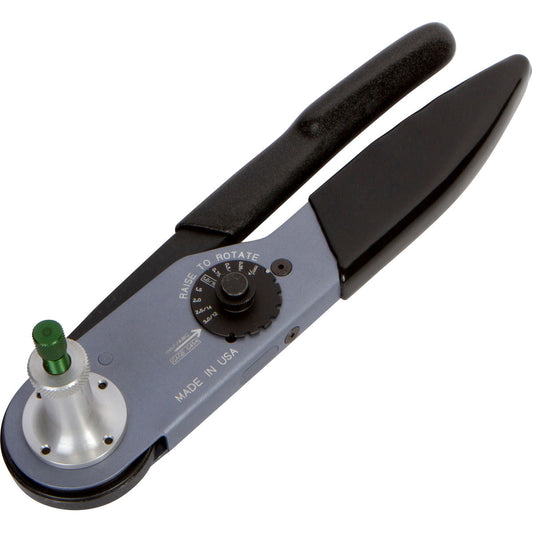
Ratcheting crimp tools apply uniform compression every time. Unlike soldering — which depends on temperature and technique — crimping produces repeatable, testable results.
Common Crimping Mistakes to Avoid
Using the Wrong Tool
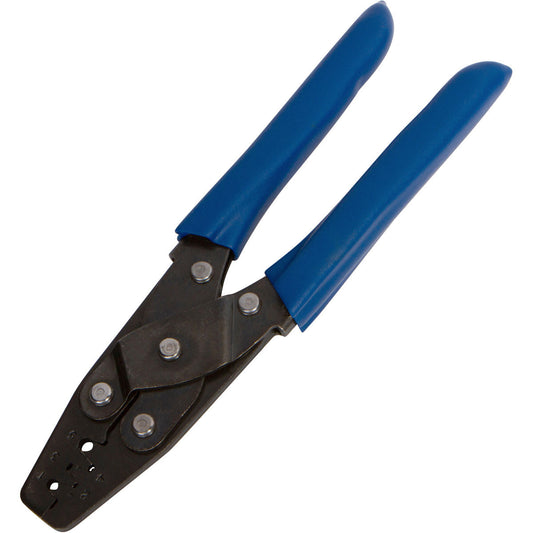
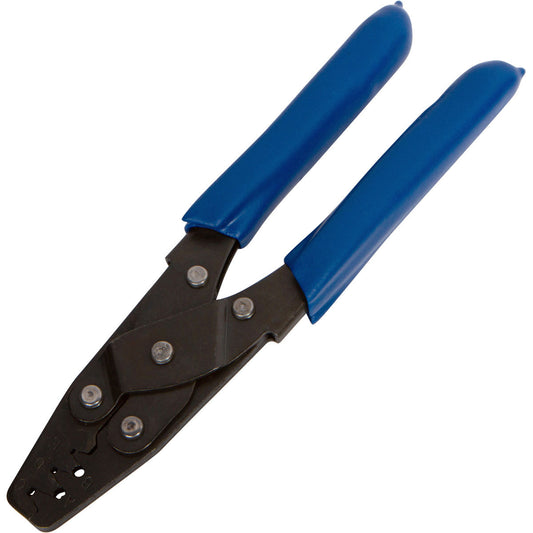
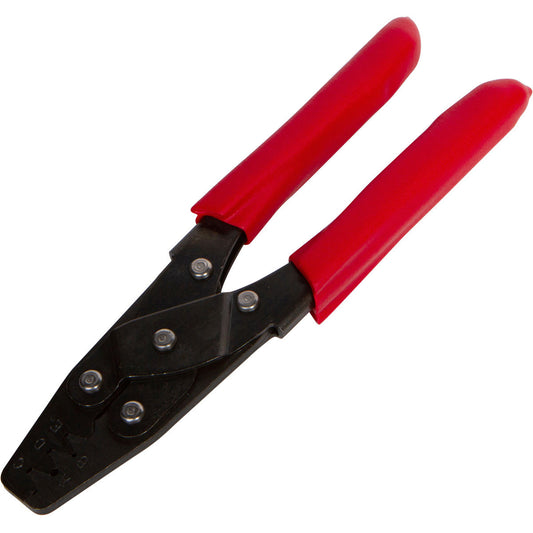
Never use pliers or generic crimpers. Use OEM-rated crimp tools matched to your connector family (e.g., Delphi 12085270 for Metri-Pack 150 terminals).
Over- or Under-Crimping
Too tight and the strands shear; too loose and the wire can pull free. Check the manufacturer’s crimp height spec for your terminal.
Skipping Heat-Shrink or Sealant
Open crimps attract moisture and corrosion. Finish with an adhesive-lined heat-shrink or use sealed connectors for additional protection.
Frequently Asked Questions
Is soldering ever acceptable in automotive wiring?
Yes — but only in low-vibration interior applications such as dashboards or infotainment wiring. Under-hood, chassis, or suspension circuits should never be soldered due to movement and heat exposure.
Do crimped connections need solder reinforcement?
No. A correct crimp forms a metal-to-metal bond strong enough to resist vibration, corrosion, and oxidation. Adding solder can stiffen the wire and increase failure risk.
Which lasts longer — crimped or soldered?
A proper crimped joint lasts decades. APEX 2.8 terminals, for example, are rated for repeated vibrations at 30G and endure more thermal stress than any soldered equivalent.
What are the best crimp connectors for automotive use?
Top-rated OEM systems include:
- Delphi GT 150 / GT 280 Series – compact, low-resistance terminals
- Metri-Pack 150–800 Series – low amp and heavy-duty sealed power circuits
-
Deutsch DT / DTM Series – rugged, environmentally sealed designs
All are available in Custom Connector Kits’ automotive connector catalog.
People Also Ask
Why is crimping better than soldering in cars?
Crimping is better because it forms a compact, firm, gas-tight joint that resists vibration, moisture, and corrosion. Soldered joints are rigid and can crack or loosen under vibration, especially in engine bays.
What are Delphi GT and Metri-Pack connectors used for?
Delphi’s GT and Metri-Pack systems are used in OEM vehicle harnesses for secure, low-resistance electrical connections. GT connectors are compact for signal circuits; Metri-Pack connectors handle higher current loads (up to 60 A). Both are available in sealed and unsealed versions to fit under-hood and interior applications.
How do I make a reliable automotive wire crimp?
- Strip insulation to expose clean copper strands.
- Insert wire fully into terminal barrel.
- Use a ratcheting crimp tool with the correct die for your connector series.
- Apply a firm crimp until the tool releases.
-
Finish with heat-shrink tubing or a sealed boot to protect against moisture.
(See our CCK crimping guide for visuals.)
Do I need to heat-shrink crimped connections?
No, often not if the connector is sealed, but for unsealed connections in high-humidity or under-hood areas, heat-shrink tubing seals out moisture, adds strain relief, and improves corrosion resistance.
What’s the difference between sealed and unsealed terminals?
- Sealed terminal systems (like Delphi Weather-Pack or Deutsch DTM) include rubber grommets or silicone seals for moisture protection — ideal for exterior wiring.
-
Unsealed terminal systems are used in dry, interior locations. They’re smaller, easier to service, and often less expensive.
Conclusion: Crimping Creates Stronger, Safer Automotive Connections
Crimping is not just a preference — it’s the automotive industry standard for dependable electrical connections. It delivers:
- Superior mechanical strength
- Low, stable resistance
-
Consistent performance across temperature and vibration cycles
When paired with OEM-grade connectors and proper tools, crimping ensures every wire you repair or install performs exactly like the factory harness.
Shop High-Quality Crimp Connectors at CCK
Find complete kits featuring Delphi GT, Metri-Pack, and Deutsch DT connectors — all engineered for OEM-grade reliability.
➡️ Shop Automotive Crimp Connector Kits
➡️ Learn: Terminal vs. Connector — Key Differences in Automotive Wiring